
Polling And Logging Laboratory Instruments to Excel or OpenOffice
A complete guide to read data from RS232-connected laboratory instruments and exporting parsed values directly into a Excel or OpenOffice sheets with your value-column binding.
1. Protocol Configuration: Laboratory Instruments
Communication Type: Passive Listening / Bidirectional (RS232 or USB Virtual COM)
Spectrophotometers, titrators, and blood analyzers often use proprietary ASCII formats or ASTM E1381/E1394 protocols. If the instrument outputs raw ASCII, use the 'ASCII Data Parser'. If it uses ASTM, you must use the dedicated 'ASTM Data Parser' plugin to correctly unpack the Header (H), Patient (P), Order (O), and Result (R) records.
Apply this base configuration for the serial connection:
{
  "port": "COM4",
  "baud_rate": 9600,
  "data_bits": 8,
  "stop_bits": 1,
  "parity": "none",
  "parser_type": "astm_e1381",
  "ack_nak_handshake": true
}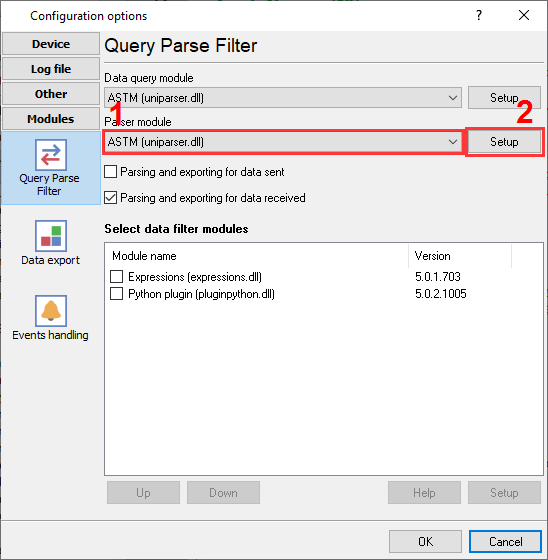
Lab instruments data parser.
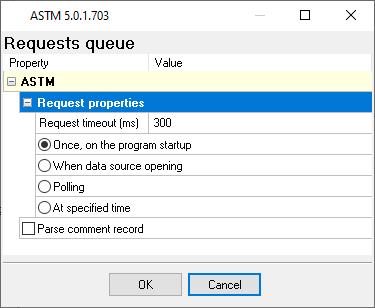
ASTM protocol parser settings.
Ready to connect Laboratory Instruments to Microsoft Excel?
2. Database Setup: Microsoft Excel
Use the 'Direct Excel Connection' or 'Local Database' export plugin. RS232 Data Logger uses OLE/DDE to write directly to .xlsx or .csv files, meaning MS Office does not strictly need to be installed on the server.
Use the following SQL script to create your target table. Limit active files to 1 million rows (Excel's maximum). Use the software's 'Log File Rotation' feature to automatically create a new Excel workbook daily or weekly to prevent file corruption.
No SQL required. Create an Excel template with headers in Row 1 (e.g., Timestamp | Port | Value). The software will automatically append new incoming serial data starting at Row 2.
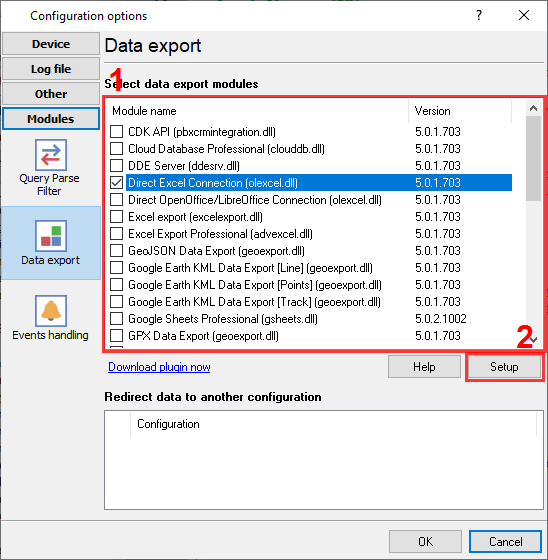
Direct Excel connector selection.
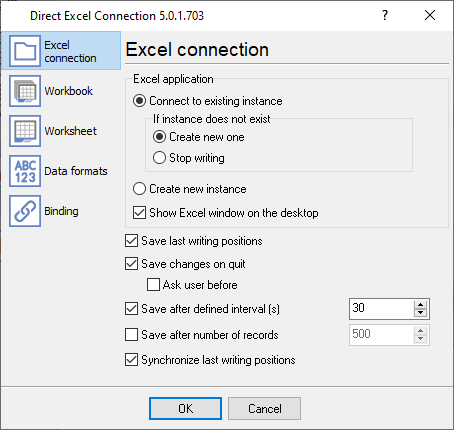
Excel file location and naming.
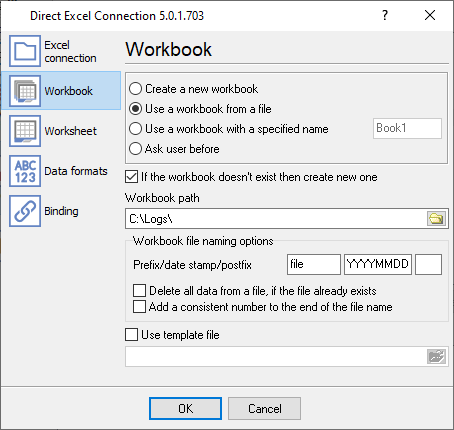
Excel workbook settings.
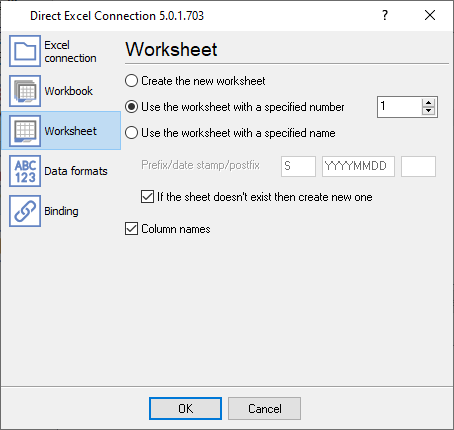
Excel worksheet settings.
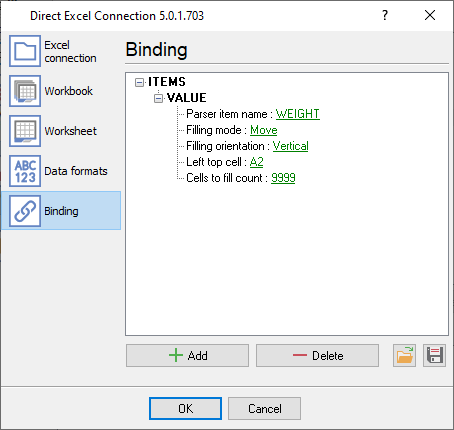
Binding: assign your parser data to columns
3. Protocol-Specific Troubleshooting
- The instrument does not send data at all: Some instruments send data only when you press the "Print" button on it or require a special command from the host computer.
- The instrument sends one record and then stops transmitting: Many lab instruments require an ACK (Acknowledge) character after receiving a data block. Enable the 'ACK/NAK handshake' feature in the Data Logger so it replies and prompts the instrument to send the next batch.
- The program does not extract all data. Some fields are missed: By default, the logger extracts significant data only. You can create your parser using ASCII Data Parser plugin or ask our support team.
4. Database-Specific Troubleshooting
- File is locked or cannot be written to: If a user has the target Excel file open on their desktop, the logger cannot write live data to it. Schedule your data exports during off-hours, or log to a temporary CSV first.
- Excel shows a strange number instead of a date value: This is a formatting issue. You can select a colum data type in our software as 'datetime' and select the necessary date format.
- How can I add column headers for my data: You can create an empty template file and specify it in the settings. When the logger starts a new file, it copies this template to the destination folder, and starts writing data from the configured cell.
- How to use data in the Excel file while the logger writes data to it?: Unfortunately, it is not possible. But, for example, you can create a new Excel file more frequently and use a closed (previous) Excel file for your needs. Or use a database instead and link to your sheet as a data source.